
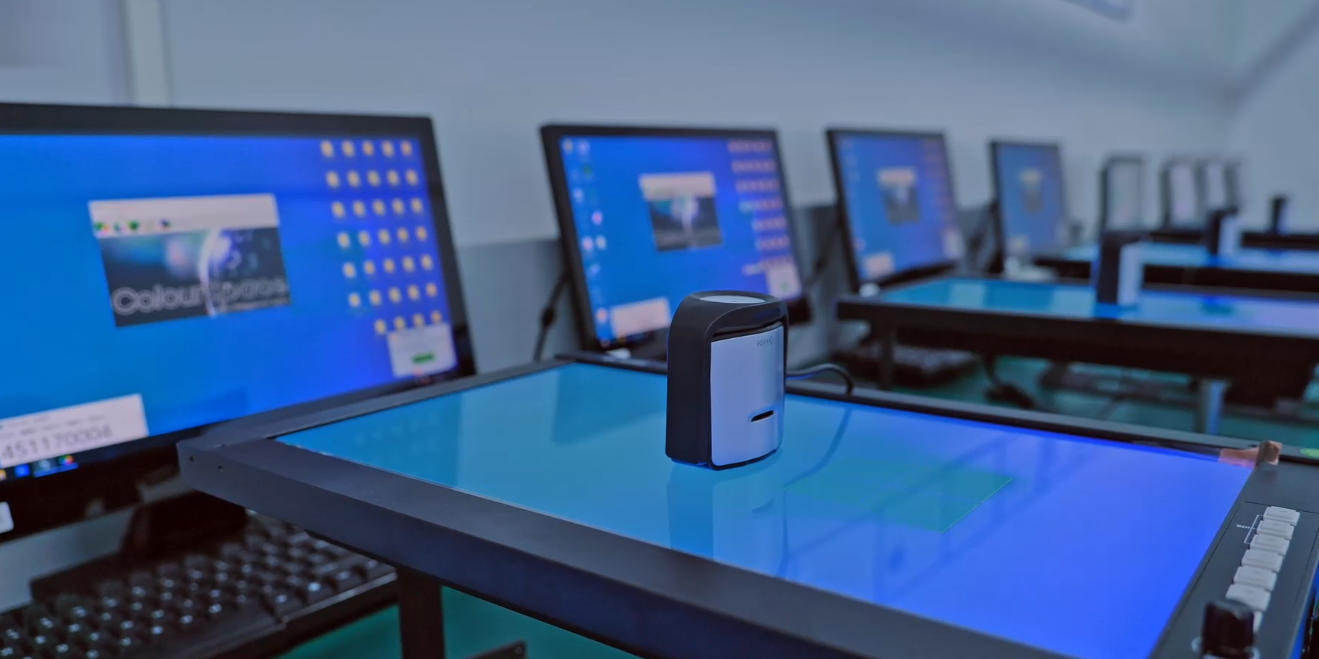
Why Broadcast Monitors Require Color Calibration?
Broadcast monitors serve as core reference equipment throughout video shooting, post-color grading and broadcasting workflows, aiming to achieve accurate on-screen image restoration of “what you see is what you get”. Display panels inevitably suffer from shifts in color, brightness and grayscale due to service time, temperature changes and equipment aging. Without regular calibration, visual errors will occur in on-set monitoring and post-production color grading.
When the final work is released on TVs or streaming platforms, problems such as color distortion, unbalanced brightness and distorted skin tones will appear, failing broadcast standards and leading to rework or audit failures. Meanwhile, standardized calibration ensures color consistency in team collaboration and multi-device monitoring, avoiding cumulative color errors in the entire production link.
Core Calibration Standards for Broadcast Monitors.
Broadcast monitor calibration follows unified global broadcast industry specifications and official domestic standards with strict and clear core parameters.
First, for color space, SD/HD broadcast scenarios strictly adopt Rec.709, 4K/8K UHD scenarios apply Rec.2020, and film production is compatible with DCI-P3 gamut.
Second, for color accuracy, the core color difference parameter ΔE value must be less than 2, and top professional devices reach ΔE<1.5 with invisible color deviation to human eyes; the cumulative color error of the entire broadcast link is capped at 1.0.
Third, for brightness and black level, the standard brightness of HD monitors is 300cd/㎡, the peak brightness of UHD monitors is ≥500cd/㎡, and the black level brightness is ≤0.01cd/㎡ to ensure pure shadow details and complete highlight layers.
Fourth, for grayscale and gamma, it strictly conforms to fixed broadcast gamma curves with uniform and unbiased grayscale, complying with the official UHD TV production and broadcasting standard. In addition, calibration supports hardware LUT mapping to lock color parameters at the hardware level for stable and unified image output.
Core Color Differences Between Broadcast Monitors and Consumer Displays.
The core difference lies in their positioning: broadcast monitors prioritize color accuracy, while consumer displays prioritize visual experience, with three specific distinctions.
First, different color logic. Broadcast monitors pursue absolute authenticity without any color optimization or saturation enhancement, restoring 100% of the original material color data. Consumer displays (computers, home TVs) automatically brighten images, increase saturation and sharpen colors to optimize entertainment viewing experience, resulting in native color distortion.
Second, different accuracy and stability. Every broadcast monitor is factory-calibrated one by one and supports regular hardware calibration with ultra-low ΔE value and long-term stable brightness, gamut and grayscale. Consumer displays only support basic gamut adaptation without professional calibration procedures, featuring large color difference, poor screen color uniformity and severe long-term color shift.
Third, different application scenarios. Broadcast devices serve professional production and broadcasting, strictly conforming to broadcast standards to ensure consistent output across multiple platforms. Consumer devices are only for daily office and audio-visual entertainment with no unified color specifications, leading to huge display differences of the same material on different devices, so they cannot be used as production references.
Post time: Jul-14-2026